
Do putter grooves and inserts actually improve roll?
This is a question that comes up often when someone is looking at a putter face and trying to decide what direction to go.
Sometimes it’s a custom build conversation. Sometimes it’s someone looking at one of my studio designs and trying to understand why one face looks different than another. The wording changes, but the question is usually the same.
Do grooves help the ball roll better?
Does an insert get the ball rolling faster?
Is deep milling actually softer, or does it just feel that way?
They’re fair questions. They’re also questions that tend to get answered with a lot of marketing language and very little clarity.

What happens when a putter strikes a golf ball
A putter does not send the ball into immediate forward roll.
There is always a short skid phase. That happens with every putter, regardless of whether the face is smooth, milled, grooved, or fitted with an insert. The ball compresses against the face, slides briefly, and then transitions into roll over the first few feet.
That transition is influenced mainly by delivered loft, strike location, and how consistently the head is delivered. Face milling and inserts do not override those factors.
This is usually the first misconception to clear up. There is no face design that eliminates skid entirely.
What face milling actually changes
When a face is milled, the material itself is not changing. The steel is still steel. What changes is the amount of contact between the face and the ball at impact. Deeper milling reduces contact area. Shallower milling increases it.
Reducing contact area changes sound and vibration. That change in feedback is what most golfers describe as feel.
A deeply milled face tends to sound quieter and feel softer. A smooth or lightly milled face tends to sound sharper and feel firmer. That difference is real, but it is not because one face rolls the ball better than the other.
What grooves do and do not do
Grooves are often described as if they grab the ball and force it into roll. That is not what’s happening. It’s not a wedge.
What grooves can do is influence how energy is transferred at impact and how consistent that transfer is across the face. In some designs, grooves can slightly reduce speed variation between center and off center strikes.
That can help certain players with distance control. It does not eliminate skid, and it does not guarantee better roll. When people talk about grooves improving roll, they are usually describing a feel or speed consistency benefit.
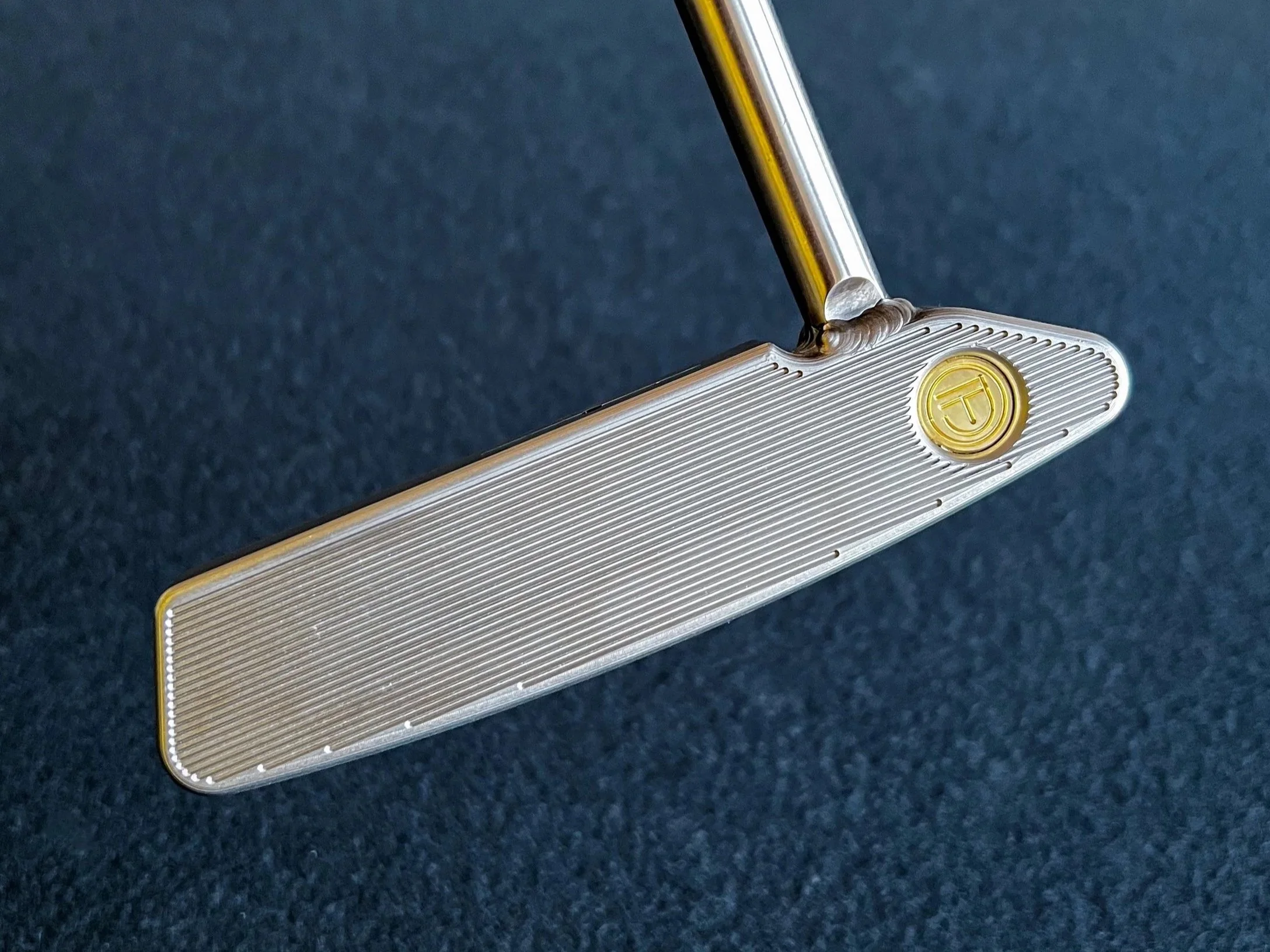
So, what’s the deal with inserts?
Inserts are used to change how the face behaves at impact without changing the entire head material.
Different insert materials compress and rebound differently. That changes sound, feedback, and how fast the ball comes off the face. Thickness, attachment method, and backing structure all matter. “Insert” by itself does not describe much.
The reason I’ve started spending more time working with inserts in my own builds is simple. They give me another way to control feedback and speed without having to redesign the entire head.
A copper insert behaves very differently than a polymer insert. Both behave differently than a one piece stainless face. Those differences are useful when a player is trying to dial in feel or manage distance, especially on faster greens.
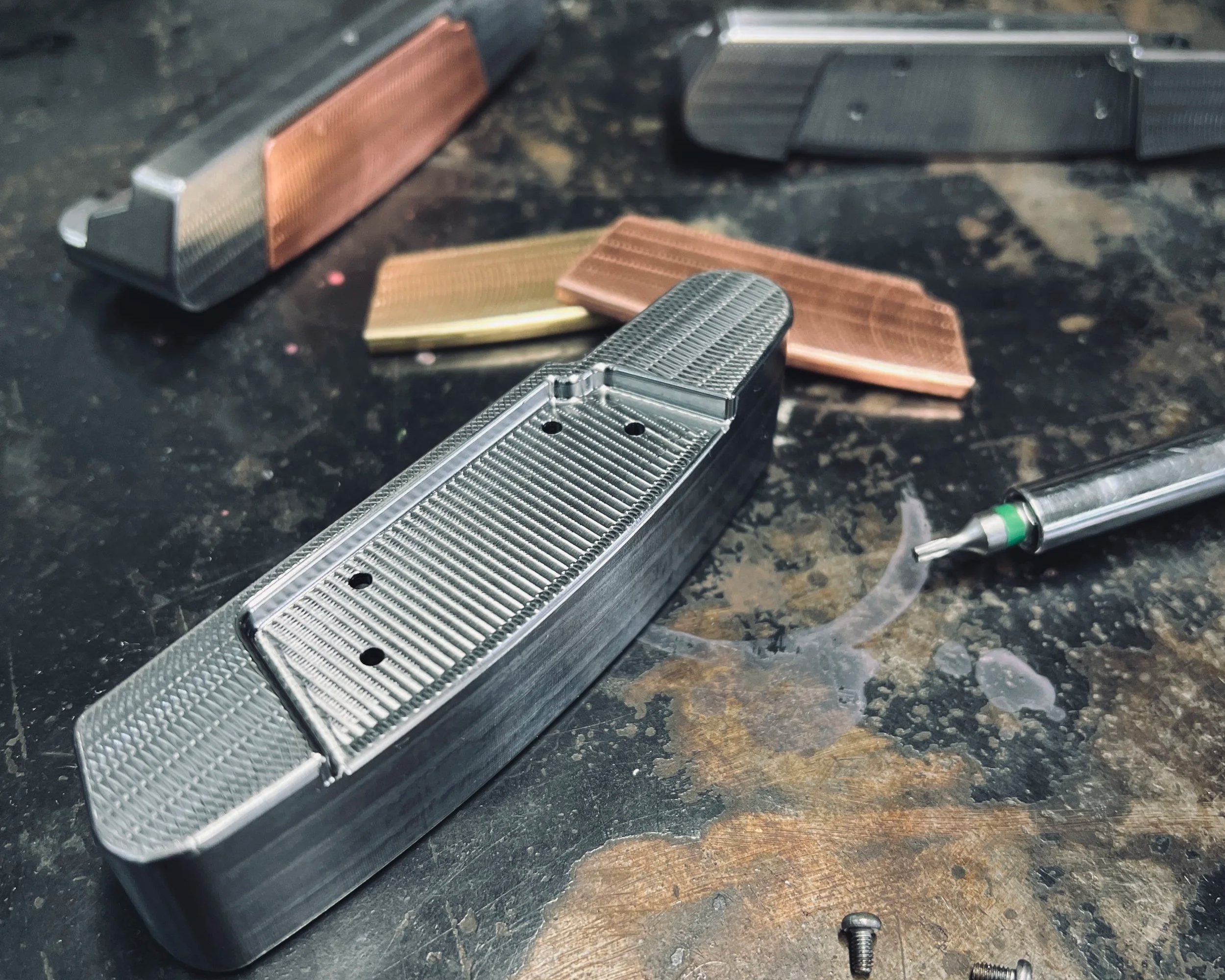
Deep milling, smooth faces, and inserts
A smooth face provides direct feedback and a firmer response. Deeper milling reduces feedback and changes sound. Inserts allow those same characteristics to be adjusted in a different way. None of these approaches is better on its own. They are just different tools.
From a builder’s standpoint, inserts open up more combinations to work with. Head weight, balance, face material, and feedback can be adjusted independently instead of being tied to a single piece of metal.
That flexibility becomes more useful when building for different players and different green conditions.
So, what face to play then?
Face patterns and inserts are ways to tune feedback.
They affect sound, feel, and how speed is perceived. Those factors influence consistency far more than any claim about roll. If a face helps you control pace and trust the strike, it is doing its job.
That is usually the most practical way to think about it.
